
'Returning Indians can leverage their international skills and the strong funding environment for start-ups here.'
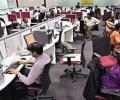
India's services PMI recovered from its ten-month low in September to reach 58.5 in October supported by strong expansions in output and new business, which in turn boosted job creation, a monthly survey said on Wednesday. The seasonally adjusted HSBC India Services Business Activity Index increased from 57.7 in September to 58.5 in October, as robust sales pipelines and strong demand conditions supported the upturn in business activity. In the Purchasing Managers' Index (PMI) parlance, a print above 50 means expansion, while a score below 50 denotes contraction.

'The scale and depth of talent here plays a central role in core software product engineering for some of the biggest brands in tech.'

In absolute terms, both types of cars must cut emissions by about 28-29 g/km. But in percentage terms, the lighter 900-kg car must reduce emissions by 27 per cent, while the 1,500-kg car needs a 22 per cent cut. And the target becomes progressively stringent for both -- but, once again, the tightening is sharper for the 900-kg car than for the 1500-kg car.

Top real estate developers are expected to report improved earnings and resilient presales growth, even as overall housing sales across major Indian cities declined during the July-September quarter (Q2) of 2025-26. The anticipated earnings growth in what is typically a subdued quarter is credited to steady sustenance sales, improved collections, the strong positioning of listed developers, and sustained demand for premium homes.

Foreign portfolio investors sold stocks worth Rs 1.42 trillion in 2025, with their sales hitting Rs 12,257 crore in the first four trading days of September.

Instead of ticking off bucket-list activities, 'Nap'cations revolve around curated rest. Think blackout curtains, memory foam beds, herbal teas, rejuvenating spa sessions, and even anytime breakfasts.

The stocks are largely from sectors such as chemicals, finance and cement, which struggled earlier but the worse seems to be behind them.

'While the concept was introduced globally over four decades ago, branded residences have taken off now in India.'

You can't be the second-most expensive market in the world and deliver just 10 per cent EPS growth, points out Akash Prakash.

Who else will take on the might of Microsoft, Google, and Amazon if not the Adanis, Ambanis, Birlas, or Tatas?, asks R Jagannathan.

'Government officials use Gmail and ordinary phones without basic security consciousness.' 'Interoperability, especially in joint exercises with countries like the US, worries me.' 'It often means we open our systems to them, but they don't reciprocate.' 'They could have kill switches in their systems and might even be able to affect ours.'

Stakeholders said the industry was first hit by widespread cancellations after the April 22 Pahalgam terror attack in Jammu and Kashmir, and the fresh disturbances have further dented travellers' confidence.

The restaurant chains are riding the Hallyu wave -- a phenomenon about the growing global prominence of South Korean pop culture.

The rationalisation of goods and services tax (GST), announced on Wednesday, directly lowers the cost of everyday medical consumables, and also high-end therapies in oncology and rare diseases, helping reduce out-of-pocket patient expenditure and better adherence to medication.

Global factors and FII activity will dictate trends in domestic equity markets this week while assembly poll results of Maharashtra and Jharkhand may impact stocks on Monday, say analysts. Stock markets witnessed a spirited recovery on Friday with benchmark Sensex and Nifty notching the best single-day gains in more than five months and offering relief after weeks of correction.

Finance Minister Nirmala Sitharaman on Thursday asked India Inc to take advantage of the policies and reforms undertaken by the government and no longer hesitate to invest more and expand capacities. Sitharaman also asked the industry to partner with the government for skilling the youth and also to engage with the government throughout the year, and not just before the Budget.

Auto majors Maruti Suzuki, Tata Motors and Mahindra & Mahindra reported robust sales in September as reduced price tags owing to GST rationalisation led to record demand in the Navaratri period. The month also saw Tata Motors and Mahindra & Mahindra settling at number two and three positions, respectively in vehicle wholesales ahead of Hyundai Motor India.

Among the Sensex firms, Kotak Mahindra Bank, Bajaj Finserv, Bajaj Finance, Adani Ports, Trent, State Bank of India, Titan and Tata Consultancy Services were the laggards. However, Maruti, Infosys, NTPC, Asian Paints, Eternal and Hindustan Unilever were among the biggest gainers.

Last fortnight, State Bank of India Chairman C S Setty lifted the veil on a subject long spoken of in corporate corridors: Why can't our banks finance mergers and acquisitions (M&As)? Change is in the air: Indian Banks' Association (of which Setty is the chairman) is to "make a formal request" to Mint Road to make way for it. Thus far the exclusive turf of foreign banks even though its funding remains offshore - as in, it's not on these entities rupee-book (and a few select shadow banks) - a most lucrative segment in the investment banking suite, M&As, will be homeward-bound.

'As long as Sebi maintains transparency and market stability, the Jane Street episode is unlikely to deter long-term foreign capital.'

'If the near-term economic pain is absorbed more by those who have the ability and the financial strength to do so, then small and medium enterprises in downstream industries will emerge stronger from the trade imbroglio.'

Many high-profile IPOs in India since 2021 have destroyed investor wealth due to overvaluation, weak business models, and post-listing disinterest, turning 1 lakh investments into as little as 3,500.

'In diabetes remission, you go below a 6.5 HbA1c without medication.' 'And this happens only when you lose 10 to 15 per cent of your body weight with a good amount of lifestyle and dietary changes, exercise and sometimes medication.' 'You have to be able to sustain your HBA1C below 6.5 for at least a year without medication to say that the patient is in remission.'

'Every parent should rethink their decisions to send their children to the US.'

The domestic stock market will continue to monitor the Israel-Iran conflict and its impact on global supplies besides prices of crude oil this week, analysts said. Global trends and trading activity of foreign investors would also drive investors' sentiment during the week.

Knowledge workers and mid-career professionals in India are hopeful that artificial intelligence will positively impact their roles, even as concerns about job displacement persist, especially among younger professionals, a top official of a human capital management solutions provider has said. At a time when AI has become a critical part of an organisation's functioning, many professionals see the positive possibilities of AI.

'Employers increasingly want candidates who can take AI pilots from proof-of-concept to production-ready systems.' 'That requires governance, monitoring, and ROI measurement -- skills that go beyond coding and into business impact.'

Shift from producing graduates proficient in analysis and strategy to producing graduates capable of initiating, executing, and scaling impactful actions in real-world environments, points out Ajit Balakrishnan.

In the first quarter (Q1) of the ongoing financial year ending June 30, Westlife Foodworld, which operates McDonald's outlets in the South and West, reported an 88 per cent drop in net profit. While net sales remained flat, its same-store sales growth (SSSG) fell by 6.7 per cent, impacted by "subdued in-store business, although the off-premise segment saw positive same-store sales", the company said.

Quarterly earnings of corporates, trading activity of foreign investors and inflation data are the key factors that are expected to drive the momentum in the equity markets this week, analysts said.

Jio BlackRock Asset Management Pvt Ltd, a 50:50 joint venture between Jio Financial Services Ltd (JFSL) and US-based BlackRock, has received regulatory approval from the capital market regulator Sebi to commence operations as an investment manager for its mutual fund business. The Securities and Exchange Board of India (Sebi), vide letter dated May 26, 2025, has granted the certificate of registration to 'Jio BlackRock Mutual Fund' and approval to Jio BlackRock Asset Management Private Limited to act as the Asset Management Company for Jio BlackRock Mutual Fund, JFSL said in a regulatory filing.

Reliance Industries has built four high-powered growth engines of retail, digital services, media and entertainment, and new energy to propel the conglomerate's next phase of expansion, Chairman Mukesh Ambani said. Parallelly, Reliance is reshaping itself into a new-age deep-tech enterprise, he said in a message to shareholders in the firm's latest annual report.

At the stroke of midnight, live dashboards lit up simultaneously across Amazon India's World Trade Centre headquarters and Flipkart's Outer Ring Road office in Bengaluru. In sprawling "war rooms" at both the companies, executives monitored real-time data streams tracking payment speeds, inventory levels, and delivery logistics as millions of shoppers flooded online platforms.

Some of the key names include: Maruti, M&M, Ashok Leyland, Britannia, Ultratech, JK Cement, Havells, Voltas, Amber, Metro, Trent, LemonTree, Indian Hotels, Niva Bupa, HDFC Life, IGL, Acme Solar, Suzlon, Swiggy, Delhivery, ICICI Bank, HDFC Bank, Bajaj Finance, Shriram Finance," according to a report by Motilal Oswal Financial Services.

'Success isn't about a single brilliant idea; it's about the relentless execution, the ability to withstand the storms, and the unwavering belief in your mission, even when no one else sees it,' Madhu Lunawat, founder, The Wealth Company.

In the past 10 years, over 500 PSB officers have died by suicide. When targets are overwhelming, senior management and customers are both impatient, and there is constant fear, not every banker has the resilience to survive and thrive, warns Tamal Bandyopadhyay.

At 8,700 screens, India, the world's largest film producing country, has just six screens for every million of its people, compared to 125 in the US and 30 in China. With Sitaare Zameen Par, Aamir Khan hopes to expand the market for Indian cinema.


Within weeks of announcing his exit as executive chairman of the global software-as-a-service (SaaS) company Freshworks, its founder Girish Mathrubootham appears to be on an investment spree.
